Free tool · With audio
Hebrew Numbers: Say Any Number
Type a number up to 999,999,999 and get it in Hebrew words, with vowel points, transliteration and audio. Each result explains why it is said that way, so you can build the next number yourself.
Try an example
In Hebrew
אַלְפַּיִם עֶשְׂרִים וְשֵׁשׁ
alpayim esrim ve-shesh
Without vowel points אלפיים עשרים ושש
Part by part
- אַלְפַּיִםalpayim2,000
- עֶשְׂרִיםesrim20
- וְשֵׁשׁve-sheshand 6
Why it is said this way
- 2,000 is one word, אַלְפַּיִם: אֶלֶף with the dual ending ־ַיִם.
- Counting, years, prices and phone numbers use the feminine forms: שָׁלוֹשׁ, חָמֵשׁ, שֵׁשׁ.
- “And” (ו) goes only before the last part: אֶלֶף תְּשַׁע מֵאוֹת אַרְבָּעִים וּשְׁמוֹנֶה.
- ו is said ve-: וְשֵׁשׁ, ve-shesh.
In use
2,026 books
אַלְפַּיִם עֶשְׂרִים וְשִׁשָּׁה סְפָרִים
alpayim esrim ve-shisha sfarim
From 3 on, the number comes first and the noun is plural.
2,026 minutes
אַלְפַּיִם עֶשְׂרִים וְשֵׁשׁ דַּקּוֹת
alpayim esrim ve-shesh dakot
In Hebrew letters
ב׳כ״ו
In the Hebrew calendar
2026 is 5786 (תשפ״ו) until September 11, 2026, then 5787 (תשפ״ז) from September 12, 2026.
The basics
Hebrew numbers 0 to 20
Every number has a feminine and a masculine form. Learn the feminine first: it is the one for counting, prices, years and phone numbers.
Tens, hundreds and thousands
With these and 1 to 19 you can say any number: the biggest part first, as in English, and “and” before the last one.
| Number | Hebrew |
|---|---|
| 20 | עֶשְׂרִים esrim |
| 30 | שְׁלוֹשִׁים shloshim |
| 40 | אַרְבָּעִים arba'im |
| 50 | חֲמִשִּׁים khamishim |
| 60 | שִׁשִּׁים shishim |
| 70 | שִׁבְעִים shiv'im |
| 80 | שְׁמוֹנִים shmonim |
| 90 | תִּשְׁעִים tish'im |
| Number | Hebrew |
|---|---|
| 100 | מֵאָה me'a |
| 200 | מָאתַיִם matayim |
| 300 | שְׁלוֹשׁ מֵאוֹת shlosh me'ot |
| 400 | אַרְבַּע מֵאוֹת arba me'ot |
| 500 | חֲמֵשׁ מֵאוֹת khamesh me'ot |
| 600 | שֵׁשׁ מֵאוֹת shesh me'ot |
| 700 | שְׁבַע מֵאוֹת shva me'ot |
| 800 | שְׁמוֹנֶה מֵאוֹת shmone me'ot |
| 900 | תְּשַׁע מֵאוֹת tsha me'ot |
| Number | Hebrew |
|---|---|
| 1,000 | אֶלֶף elef |
| 2,000 | אַלְפַּיִם alpayim |
| 3,000 | שְׁלוֹשֶׁת אֲלָפִים shloshet alafim |
| 4,000 | אַרְבַּעַת אֲלָפִים arba'at alafim |
| 5,000 | חֲמֵשֶׁת אֲלָפִים khameshet alafim |
| 6,000 | שֵׁשֶׁת אֲלָפִים sheshet alafim |
| 7,000 | שִׁבְעַת אֲלָפִים shiv'at alafim |
| 8,000 | שְׁמוֹנַת אֲלָפִים shmonat alafim |
| 9,000 | תִּשְׁעַת אֲלָפִים tish'at alafim |
| 10,000 | עֲשֶׂרֶת אֲלָפִים aseret alafim |
How it works
How to build any number in Hebrew
Biggest part first
Thousands, then hundreds, then tens and units, as in English: 1948 is אֶלֶף תְּשַׁע מֵאוֹת אַרְבָּעִים וּשְׁמוֹנֶה, “thousand, nine hundred, forty and eight”.
“And” before the last part
ו (and) is attached to the last word only: עֶשְׂרִים וְחָמֵשׁ, 25. It is said ve-, or u- before a shva or ב, מ, פ, or va- before a Hataf Patah.
Feminine by default
Counting, years, prices, phone numbers and ages use the feminine forms. Switch to the masculine only to count a masculine noun: שְׁלוֹשָׁה סְפָרִים, three books.
One and two with a noun
One follows the noun: סֵפֶר אֶחָד. Two has a short form in front of it: שְׁנֵי סְפָרִים, שְׁתֵּי דַּקּוֹת.
What you will hear in Israel
Ve- for “and”
Most people say ve- everywhere, even where the standard form is u-.
- Standard
- esrim u-shtayim
- In speech
- esrim ve-shtayim
Feminine with masculine nouns
Feminine forms are often used with masculine nouns too. Learn the standard forms and you will understand both.
- Standard
- שְׁלוֹשָׁה סְפָרִים
- In speech
- שָׁלוֹשׁ סְפָרִים
Before thousand and million
Before אֶלֶף and מִילְיוֹן many speakers use the feminine number. The standard form is masculine.
- Standard
- חֲמִשָּׁה עָשָׂר אֶלֶף
- In speech
- חֲמֵשׁ עֶשְׂרֵה אֶלֶף
A short form with “the”
3 to 10 take a short form before a noun with “the”: שְׁלוֹשׁ הַדַּקּוֹת, the three minutes.
- Three books
- שְׁלוֹשָׁה סְפָרִים
- The three books
- שְׁלוֹשֶׁת הַסְּפָרִים
Phone prefixes in pairs
The prefix of a phone number, such as 050, is often read in pairs.
- Digit by digit
- אֶפֶס חָמֵשׁ אֶפֶס
- In pairs
- אֶפֶס חֲמִשִּׁים
First to tenth
Hebrew has ordinal words only up to 10. From 11 on, put the number after the noun, both with “the”: הַיּוֹם הָעֶשְׂרִים, the twentieth day.
- 1רִאשׁוֹנָהrishona
- 2שְׁנִיָּהshniya
- 3שְׁלִישִׁיתshlishit
- 4רְבִיעִיתrevi'it
- 5חֲמִישִׁיתkhamishit
- 6שִׁשִּׁיתshishit
- 7שְׁבִיעִיתshvi'it
- 8שְׁמִינִיתshminit
- 9תְּשִׁיעִיתtshi'it
- 10עֲשִׂירִיתasirit
- 1רִאשׁוֹןrishon
- 2שֵׁנִיsheni
- 3שְׁלִישִׁיshlishi
- 4רְבִיעִיrevi'i
- 5חֲמִישִׁיkhamishi
- 6שִׁשִּׁיshishi
- 7שְׁבִיעִיshvi'i
- 8שְׁמִינִיshmini
- 9תְּשִׁיעִיtshi'i
- 10עֲשִׂירִיasiri
Hebrew numerals
Numbers in Hebrew letters
Every Hebrew letter also stands for a number. Letters are used for dates in the Hebrew calendar, the Hebrew year, Bible chapters and lists, where English would use 1, 2, 3 or a, b, c.
קכ״ג = 100 + 20 + 3 = 123
Largest first, then add
Hebrew is read from the right, so the letter with the largest value comes first. Add the letters up to get the number.
ת״ק = 400 + 100 = 500
Above 400, repeat ת
ת (400) is the largest letter, so 500 is written ת + ק, and 999 is תתקצ״ט.
ט״ו = 9 + 6 = 15
15 and 16
15 and 16 are written 9 + 6 and 9 + 7 (ט״ו, ט״ז), never י״ה or י״ו, which would spell a name of God.
י״ח = 10 + 8 = 18
Geresh and gershayim
One letter takes a geresh: ה׳ is 5. Several letters take gershayim before the last one, so the number is not read as a word.
ע״ר = 70 + 200 = 270
Final and reordered letters
Final letters (ך ם ן ף ץ) count like the regular ones. Some texts reorder letters that would spell a bad word: ע״ר for 270 rather than ר״ע.
חַי = 8 + 10 = 18
Gematria: the value of a word
The same values turn any word into a number, its gematria. חַי, “alive”, is 8 + 10 = 18: that is why 18 is a lucky number and gifts often come in multiples of 18.
Try it in the converter Open the gematria calculator
This Hebrew year is ה׳תשפ״ז (5787), from September 12, 2026 to October 1, 2027. The thousands are usually left out, so you will mostly see תשפ״ז.
Practice
Practise 0 to 20 by ear
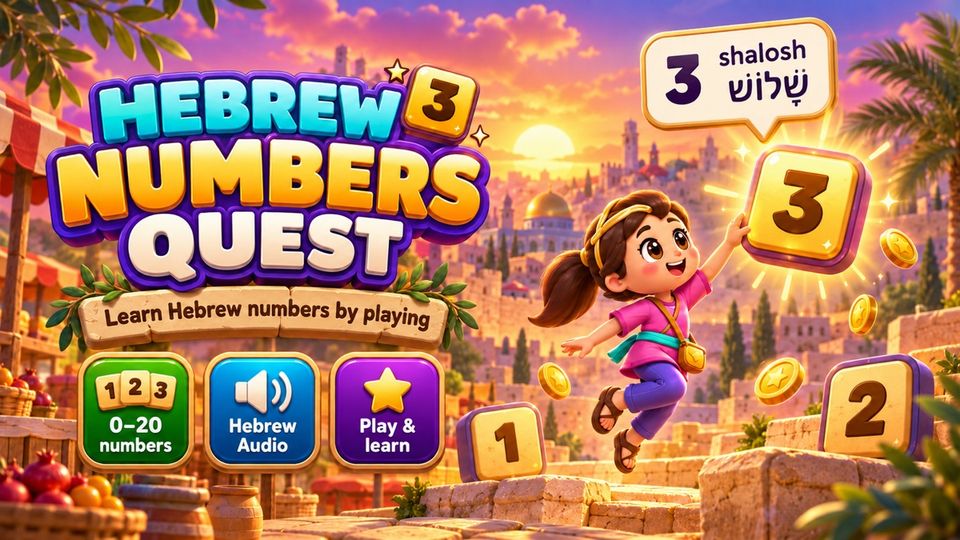
Hebrew Numbers Quest is a free platform game: run and jump through an ancient city, hear a number in Hebrew and bump the block that shows it.
Play Hebrew Numbers QuestBeyond numbers
Learn Hebrew step by step
The HebrewEdu app takes you from the alphabet to vocabulary, verbs and short readings, with audio and translation.


Hebrew numbers: questions
How do you count from 1 to 10 in Hebrew?
With the feminine forms, the ones used for counting: אַחַת, שְׁתַּיִם, שָׁלוֹשׁ, אַרְבַּע, חָמֵשׁ, שֵׁשׁ, שֶׁבַע, שְׁמוֹנֶה, תֵּשַׁע, עֶשֶׂר (akhat, shtayim, shalosh, arba, khamesh, shesh, sheva, shmone, tesha, eser). The masculine forms are in the 0 to 20 chart.
Why do Hebrew numbers have masculine and feminine forms?
Numbers agree with the noun they count, like adjectives. The feminine is the default for counting, years and prices. With a masculine noun, 3 to 10 take the forms ending in ־ָה: שְׁלוֹשָׁה סְפָרִים (shlosha sfarim, three books), but שָׁלוֹשׁ דַּקּוֹת (shalosh dakot, three minutes).
How do you say the year 2026 in Hebrew?
As one full number, in the feminine: אַלְפַּיִם עֶשְׂרִים וְשֵׁשׁ (alpayim esrim ve-shesh), “two thousand twenty and six”. Hebrew does not split a year in two the way English says “twenty twenty-six”.
How are numbers written with Hebrew letters?
Each letter has a value, from א = 1 to ת = 400, and you add them up, largest first. A geresh or gershayim marks the letters as a number: י״ח = 18. Type letters in the converter to read them, or see the letter chart.
What year is it in the Hebrew calendar?
The Hebrew year 5787 (תשפ״ז) runs from September 12, 2026 to October 1, 2027. A Hebrew year starts at Rosh Hashanah, in September or early October, so every Gregorian year overlaps two Hebrew years.
Why is 18 special in Hebrew?
The letters of חַי (chai, “alive”) are ח = 8 and י = 10, which add up to 18. That is why gifts are often given in multiples of 18. As a number, 18 is written י״ח.
How do Israelis say phone numbers?
Digit by digit, with the feminine forms, and 0 is אֶפֶס (efes). The prefix is often read in pairs: 050 as אֶפֶס חֲמִשִּׁים. Type a number that starts with 0 in the converter to hear it digit by digit.
Keep learning
Hebrew alphabet course
A free lesson for each letter, so Hebrew numerals and years read easily.
Everyday Hebrew phrases
Short phrases for daily life, with audio and transliteration.
Hebrew cursive
See any word the way Israelis write it by hand.